
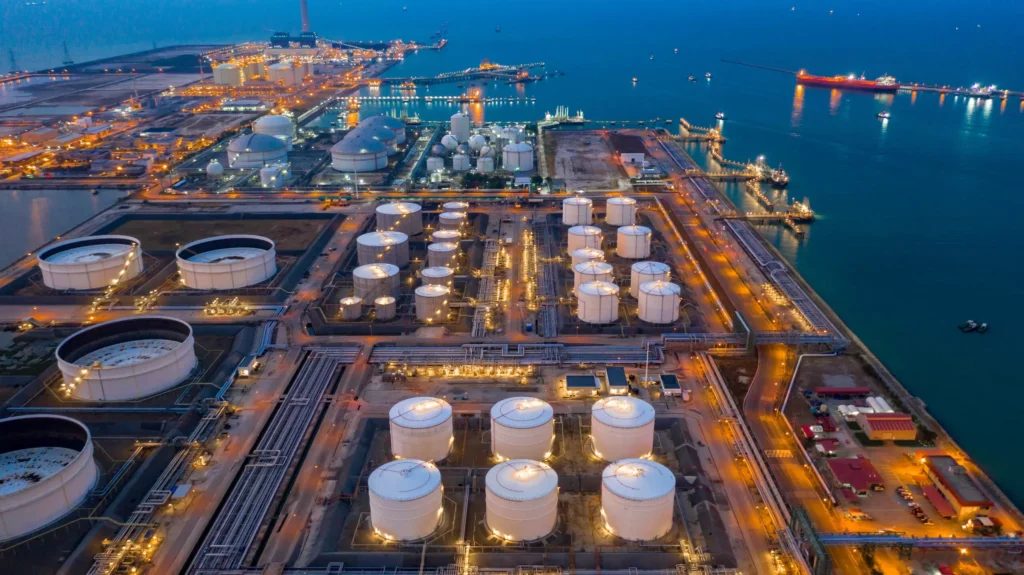
While the world looks to Africa as a vital energy supplier, the continent itself stands at a crossroads. With over 550 trillion cubic feet (tcf) of recoverable gas—ranking it second globally for discovered but undeveloped resources—the challenge is no longer just finding the gas; it’s figuring out how to use it.
The African Energy Chamber’s (AEC) State of African Energy 2026 Outlook highlights a strategic tug-of-war between lucrative LNG exports and the urgent need for domestic industrialization.
LNG as the Financial Anchor
Liquefied Natural Gas (LNG) remains the heavy hitter for monetization. In 2024, Africa moved nearly 35 million tons of LNG, with new giants like Mozambique’s Coral Sul FLNG and the Greater Tortue Ahmeyim (GTA) project in Senegal-Mauritania shifting the global balance of power.
Africa’s geographical “sweet spot” allows it to act as a swing supplier, pivoting between European and Asian markets based on wherever the price is highest. However, the window of high prices may be closing. With the U.S. and Qatar flooding the market, global prices could drop from $13/MMBtu to below $6/MMBtu by the late 2020s, forcing African producers to become leaner and more competitive.
The Domestic Dilemma: Power vs. Profit
The real “industrial story” lies within Africa’s borders. Gas demand on the continent is projected to surge by 60% by 2050, yet the path to domestic utilization is blocked by a significant pricing gap.
-
The Price Gap: In mid-2025, international LNG prices hovered around $11–$13 per MMBtu, while domestic benchmarks—like Nigeria’s at $2.13 per MMBtu—remain regulated.
-
The Investment Risk: While low prices help local consumers, they can discourage developers from building the very infrastructure needed to deliver that gas.
-
Domestic Market Obligations (DMOs): Countries like Senegal are mandate-driven, requiring a portion of export gas to be diverted to local power plants. This “Gas-to-Power” model is the backbone of energy security in Nigeria (12.6 GW capacity) and increasingly in Ghana and Mozambique.
Infrastructure: The Missing Link
The AEC report identifies infrastructure as the single greatest barrier to success. Africa currently lacks the regional pipeline networks necessary to connect massive supply basins (like the Rovuma Basin) with industrial demand centers. Without these “energy highways,” gas remains stranded or is exported as a raw commodity rather than fueling local factories.
Beyond power, gas-to-liquids, fertilizers, and petrochemicals represent the next frontier. Angola’s National Gas Planand South Africa’s advanced ammonia markets are early blueprints for how gas can reduce a nation’s reliance on expensive imports.
A Strategic Balancing Act
As NJ Ayuk, Executive Chairman of the AEC, points out, the future of African gas depends on a delicate balance:
“Governments must balance affordability and energy access with the need to provide returns that support investment in pipelines, processing facilities, and power plants.”
The 2026 Outlook makes it clear: Gas can either be a commodity Africa sells to the world, or the foundation upon which it builds its own industrial future. The next five years of infrastructure investment will determine which path the continent takes.


